
Outdoor team-building has been a popular choice for companies for years. Nature helps people leave the usual work routine, eases tension, and lets colleagues meet each other in a different role.
Whether it is an afternoon or a multi-day event, well-chosen outdoor team building can help communication, cooperation and shared memories.
Why are outdoor team-building programs popular?
Leaving the workplace on its own can help the team. Time in nature can lower stress, lift mood and encourage creative thinking.
A further plus of outdoor team-building programs is how many forms they can take. Among them you find active, creative, experience-led and problem-solving games, so almost every team can find a fit.
What to consider when choosing a program?
Before you pick a concrete program, it is worth thinking through a few points:
- How many people will take part?
- What age group is the team?
- How active or sporty is the group?
- In which season will the event take place?
- What is the main aim of the team building?
A newly formed team may need a different program than a group that has worked together for years. It also matters whether the aim is stronger ties, rest, or better cooperation.
Experience-led outdoor team building
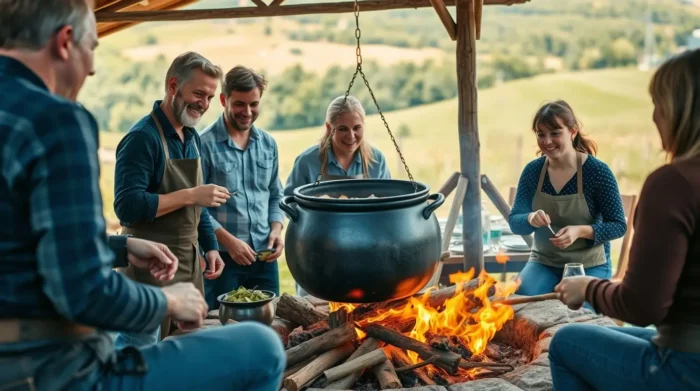
1. Team-building stew over the fire
A team-building stew over the fire is one of the most popular outdoor programs. Shared cooking naturally encourages cooperation and also leaves room for informal talk.
2. Shared barbecue
A barbecue has similar benefits to stew over the fire, but needs less prep. It can be ideal for smaller company events.
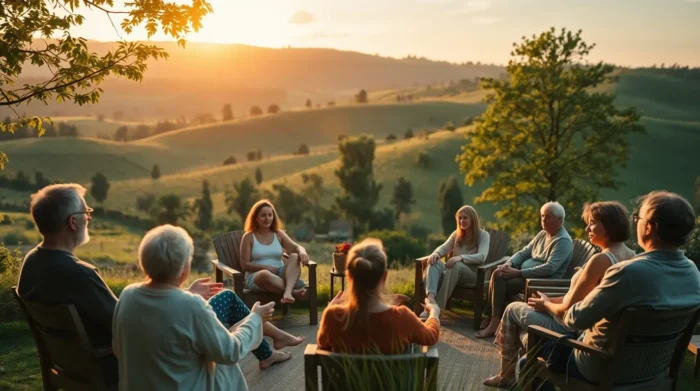
3. Campfire and evening talk
Programs around a campfire create a special mood. Evening talks often bring people closer than any formal training.
4. Garden cinema
Watching a film together is an easy way to close an active day. It works especially well on multi-day programs.
5. Picnic with playful tasks
A picnic offers rest and a shared experience at once. It can be completed with light team games or skill tasks.
Active outdoor team building
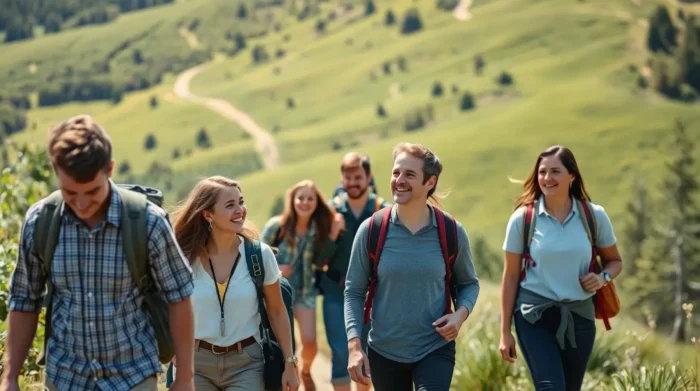
6. Team-building hike
A team-building hike gives colleagues a chance to meet outside their work roles. A shared aim and a path taken together can strengthen belonging.
7. Treasure hunt
A treasure hunt develops communication, cooperation and problem-solving at once. The difficulty of the tasks is easy to match to the group.
8. Obstacle course
On an obstacle course people must solve challenges together. These programs often develop trust and teamwork.
9. Orienteering
Orienteering combines movement, strategic thinking and teamwork. People must find their way together and reach the marked points.
10. Bike tour
A shared bike ride is a pleasant way to explore nature and still leave room for informal talk.
Outdoor team-building games
11. Quiz with stations
Teams solve knowledge, creative or skill tasks at different stations. A playful contest raises commitment and motivation.
12. Relay races
Relay races develop cooperation and working for a shared goal. The point is not always winning, but the shared experience.
13. Skill challenges
Simple but fun tasks can ease the mood and draw in people who would otherwise hold back.
14. Logic tasks outdoors
Problem-solving games develop communication and strategic thinking. Success usually needs several people’s knowledge and cooperation.
15. Strategic team games
In more complex games teams must plan over a longer stretch, make decisions and cooperate to succeed.
Why does a nature-close setting work so well?
One of the greatest pluses of outdoor team building is the setting itself. Nature can lift people out of usual roles, lower stress and support more open talk.
For multi-day programs the right team-building venue. Comfortable rooms, community spaces, outdoor program options and a setting that invites informal talk all help team building become a real memory.
Which outdoor program fits your team?
The best outdoor program is not always the most spectacular or the most active. What matters more is that it fits the team and the aims.
If the team is just getting to know each other, choose a program with plenty of informal talk and connection — for example stew over the fire, a barbecue or an easy hike.
For more active teams, movement-based programs can be the best choice. Treasure hunts, obstacle courses or orienteering give challenge and a shared experience at once.
If the aim is better cooperation or stronger problem-solving, think of logic tasks, strategy games or team challenges.
For mixed teams, programs that combine several elements often work best. Shared cooking, a hike or a quiz can let everyone find a comfortable role while the team gathers shared experiences.
In the end the key is not the program itself, but that people can connect, cooperate and take home positive shared memories.
The best team-building program is the one that becomes a shared experience
Successful team building is not memorable because it is the most expensive or unusual. What matters more is real experience, cooperation and a chance to connect.
Whether it is stew over the fire, a hike, skill games or creative challenges, shared experiences can have a lasting positive effect on how the team works.
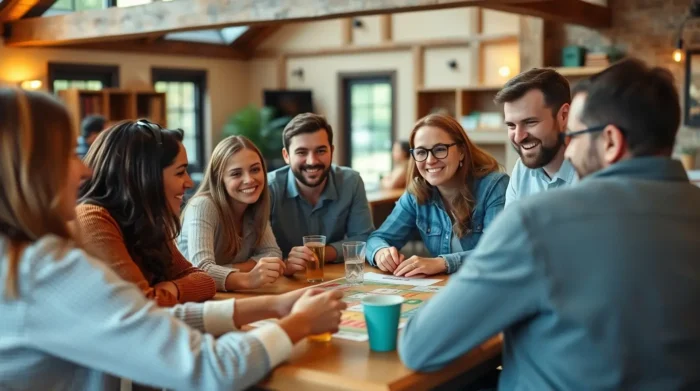
Outdoor programs offer special experiences, yet team building does not have to happen only in nature. Depending on the season and the setting, indoor team-building games can also be an excellent way to strengthen ties and develop cooperation.