
Team building today is much more than a shared dinner or a fun company event. Successful organisations see that good performance rests not only on skill, but on strong human ties and real cooperation.
But what does team building actually mean, what is it for, and why do companies pay more attention to it?
What team building means
Team building is a set of planned activities whose aim is stronger ties between colleagues, better cooperation and a clearer shared purpose.
It can be a single company event or part of a longer process. The point is always the same: situations where people can leave their usual roles and meet each other from another side.
What is the aim of team building?
The aim of team building is not only that colleagues have a good time together.
Well-planned programs can help:
- stronger trust,
- better communication,
- better cooperation,
- fewer conflicts,
- higher motivation,
- and building a sense of community.
When team members know and understand each other better, everyday work can run more smoothly too.
Why does team building matter?
Hybrid and remote work are more common, so many colleagues barely meet in person. Over time that can weaken connection and belonging.
Team building lets people meet not only as job titles or email addresses, but as human beings.
Shared experiences strengthen trust, which is one of the main bases of good cooperation.
Team building can matter especially:
- when new colleagues arrive,
- during organisational change,
- in fast-growing companies,
- for remote teams,
- or when you want to improve how the team performs.
What makes a team-building program actually work?
Not every team-building day has the effect you want. A lot depends on how well the program fits the people and the organisation’s aims.
The most successful team-building days usually:
- invite active participation,
- give space to connect,
- create shared experiences,
- do not put people in an awkward position,
- and leave enough time for informal talk as well.
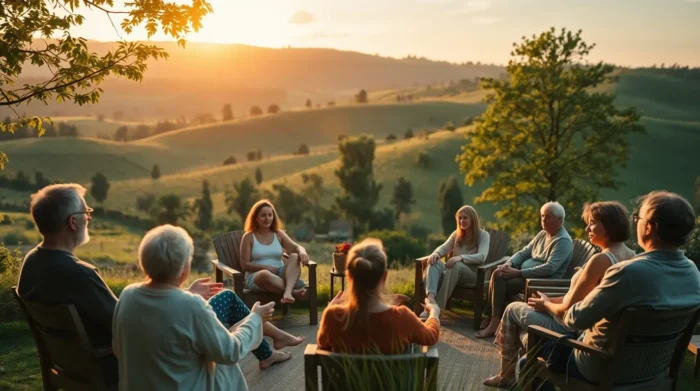
A choice of venue also plays an important role. A nature-close setting can help people leave everyday routine and become more open to new experiences.
Team-building programs take many forms
There is no single perfect program for every team. The right choice depends on size, aims, make-up, and what kind of experience the company wants to offer.
1. Indoor and outdoor team building
Team-building programs also differ by type of venue.
- A indoor programs have the plus that they can be organised in any weather, and often put more weight on communication, strategic thinking or creative cooperation.
- A outdoor team building by contrast give space to step away, move and connect through experience. A nature-close setting often helps people connect more openly and freely.
2. Different aims, different programs
Team-building programs can also differ a lot in content.
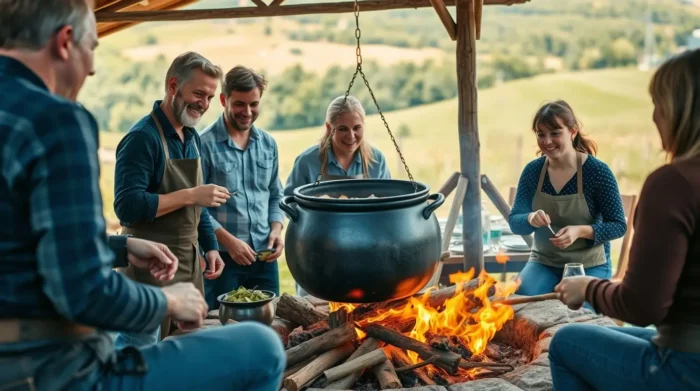
Experience-led programs are popular: they create shared memories and positive moments. Examples include shared cooking, stew over the fire, hikes vagy kalandprogramok.
Creative team building is built on making things together. This can include art, craft or other creative workshops.
Problem-solving programs develop thinking together and strategic skill. People must solve tasks, challenges or logic games as a group.
Quizzes, contests and playful competitions are popular too — they strengthen communication and team spirit in a light way.
The best programs often mix several elements, so they give experience, rest and a real chance to connect.
The heart of team building is connection
The heart of team building is not competition, not a list of compulsory programs, and not filling every minute with activity.
The real value is the ties that form or deepen during shared experiences.
When colleagues know each other better, they ask for help more easily, communicate more clearly, and work toward shared aims with more trust.
That is why team building is not simply a company event, but a longer investment in how the team works — and thus in effectiveness.